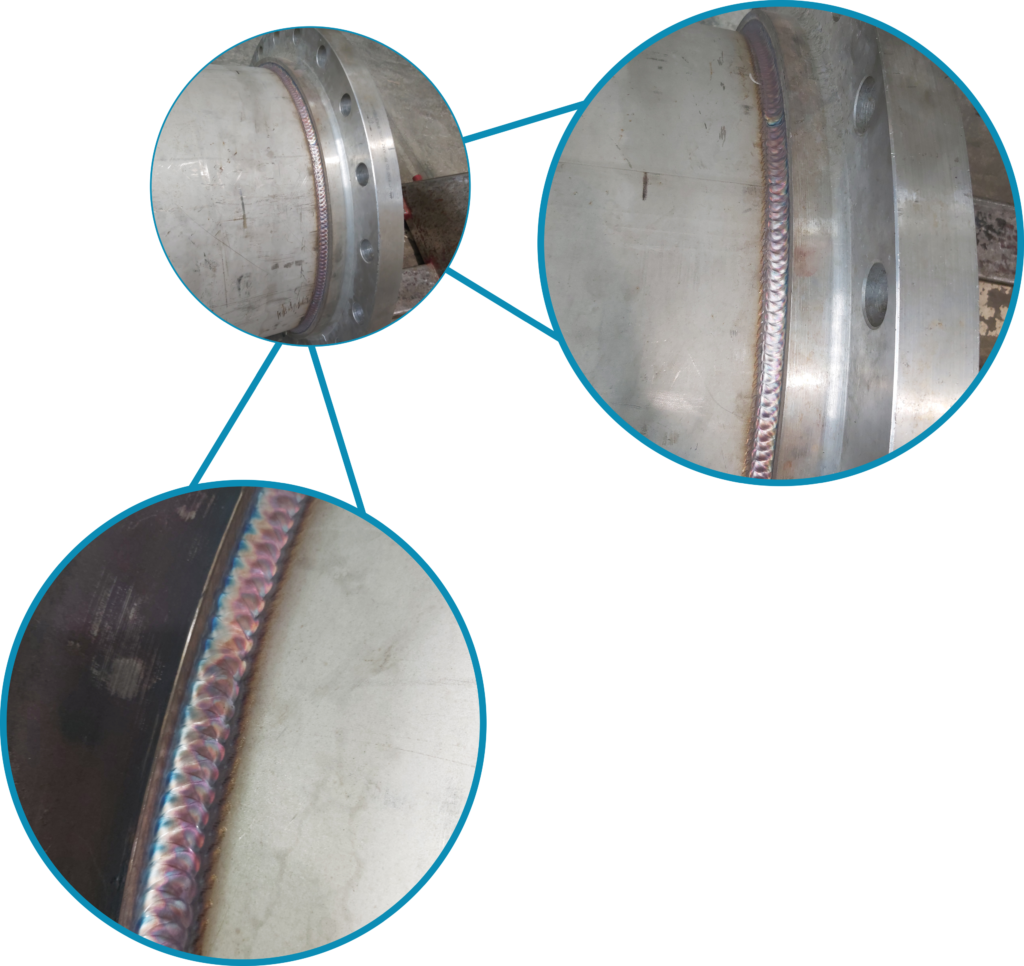
Welding is the most widely used method for joining two components (materials) in the industry. It involves the process of bonding two or more metal parts using heat, pressure, or a combination of both. Welding plays a critical role in the development of infrastructure, transportation, manufacturing, and many other industries. The American Welding Society (AWS) has identified more than 50 different welding processes.
This article provides a brief overview of some of the most important types of welding methods.
Types of Welding Processes
Welding methods can be categorized based on the prevention of oxidation and the method of establishing the electric arc (or flame).
Rising temperatures significantly accelerate the rate of oxidation in metals. In welding processes, the molten material reaches extremely high temperatures (ranging from 1500°C to 4000°C), which substantially increases the risk of oxidation. Therefore, it is crucial to use shielding agents to protect the molten material from oxidizing agents in the working environment (such as oxygen and water vapor).
This approach to welding is referred to as “Shielded Welding,” which includes the following methods:
1. Using Inert Shielding Gases
Inert gases do not participate in oxidation-reduction reactions, making them ideal for preventing oxidation during welding. Argon and helium are among the most commonly used shielding gases in welding processes. High-purity argon enables the welding of highly reactive metals such as titanium.
2. Using Semi-Inert Shielding Gases
Given the high cost of inert gases, CO₂ can be used as an alternative shielding gas. Although CO₂ is not classified as a noble gas, its stability allows it to act similarly, providing effective protection over the molten pool. Unlike inert gases such as argon, CO₂ interacts with the welding arc, increasing its energy and enhancing weld penetration. This makes CO₂ an attractive option for welding thicker materials and achieving deep weld penetration.
Additional Benefits of Shielding Gases
Beyond oxidation prevention, shielding gases offer two additional advantages:
Contaminant Control: They prevent the entry of atmospheric impurities (such as nitrogen or fine dust particles), which could cause porosity in the weld.
Heat Management: By controlling heat transfer, they help minimize surface distortion during welding, improving the surface quality.
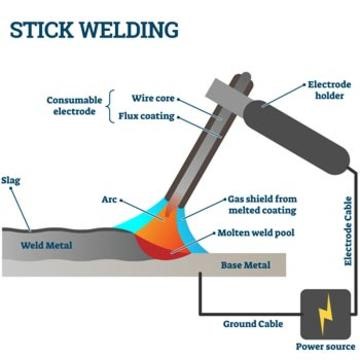
Using Consumable Electrodes with Protective Coating In this method, a consumable electrode with a protective coating, known as flux, is used. As the metallic core of the electrode melts to form the weld pool, the flux coating decomposes, releasing vapors that act as a shielding gas to prevent oxidation.
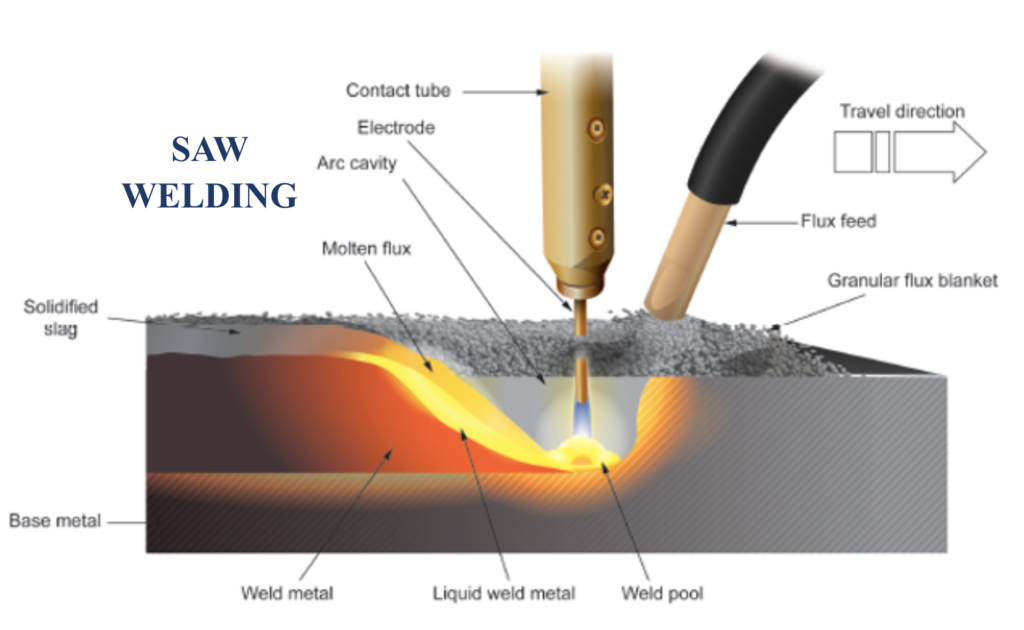
Using Powder Coating This technique involves a separate nozzle to inject a dense powder coating over the molten pool, providing protection against oxidation.
Method of Establishing the Electric Arc
To create the molten pool and integrate materials within it, a heat source is required. In most welding techniques, this heat is generated using an electric arc. Based on this criterion, welding methods can be classified into two categories:
1. Arc Formation Between a Consumable Electrode and Base Metal
In this method, the consumable electrode directly contacts the base metal, establishing an electric current and creating an arc between the electrode and the base. The heat generated by the arc melts both the base metal and the electrode, resulting in the formation of a weld.
2. Arc Formation Using a Separate Nozzle
This method utilizes a fixed, non-consumable electrode (such as tungsten) to establish the arc. A filler rod is required to create the weld seam, as the electrode itself does not melt.
Common Welding Processes in Industry
1. Gas Tungsten Arc Welding (GTAW) or TIG Welding
This method uses a non-consumable tungsten electrode to create the electric arc, along with an inert shielding gas (such as argon or helium) to protect the welding area. Due to the extremely high arc temperature and the use of expensive inert gases, this technique offers the highest weld quality compared to other methods and is particularly suitable for welding sensitive metals. This process is also commonly known as “Argon Welding.”
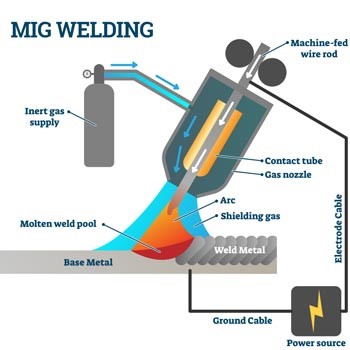
2. Gas Metal Arc Welding (GMAW) or MIG Welding
In this method, a consumable electrode is used to create the arc, while a gun injects shielding gas (such as argon or a mixture of CO₂ and argon) to protect the welding area. This process is ideal for high-speed welding and materials of varying thicknesses. It is also referred to as “CO₂ Welding.” Today, this is the most commonly used welding method in the industrial sector.
3. Shielded Metal Arc Welding (SMAW)
This method, one of the most popular welding techniques worldwide, uses a consumable electrode with a protective coating. During the arc process, the coating decomposes, producing shielding gases and a protective slag layer that protects the weld area from oxidation. This technique is also commonly known as “Electric Welding.”
4. Submerged Arc Welding (SAW)
In this method, the electric arc is formed beneath a protective layer of flux powder. The powder shields the weld area from oxidation while improving weld quality and penetration. This process is widely used for welding pressure vessels, boilers, various types of pipes, and structural components in construction.
Can CO₂ Be Used in TIG Welding?
While CO₂ is widely used in MIG welding due to its efficiency, its use in TIG welding is more complex. As mentioned earlier, MIG welding uses consumable electrodes, whereas TIG welding employs non-consumable tungsten electrodes. Consequently, TIG welding requires a shielding gas that does not react with the arc or intensify its energy, as tungsten inherently generates an extremely high-temperature arc.
Although CO₂ offers certain advantages, its reactivity can compromise the integrity of TIG welds, potentially leading to issues with weld appearance and quality. For this reason, inert gases such as argon or helium are preferred in TIG welding to ensure optimal results.
The Truth Behind a Rumor
Since the widespread use of argon gas in welding, rumors have circulated about its potential harmful effects, such as claims that argon can cause infertility. However, it’s important to know that this rumor has no scientific basis. Argon is an inert gas, meaning it is very stable and does not undergo chemical reactions with any substance, including the human body. Argon naturally exists in the air and Earth’s atmosphere.
However, the rumor may have arisen for the following reasons:
1. Exposure to Confined, Unventilated Spaces
Argon is heavier than air, and if it accumulates in a confined, poorly ventilated space, it can displace oxygen. This could lead to suffocation and serious health issues. However, this danger is due to a lack of oxygen, not the properties of argon itself.
2. Occupational Secondary Effects
Welders may be exposed to other factors, such as ultraviolet (UV) radiation, welding fumes, and heavy metals, which can affect reproductive health. Therefore, the problem is not linked to argon gas but rather to the overall working conditions.
In summary, argon gas itself does not pose a fertility risk, but poor working conditions could lead to other health problems.
Conclusion
Given the critical role of welding in various industries, selecting the appropriate welding method based on factors such as working conditions, weld joint strength, precision, safety, and more is of utmost importance. Preventing oxidation to extend the lifespan of the weld and prevent corrosion is one of the key considerations that has shaped some of the most common welding methods in the industry.