How to Calculate the Pressure Capacity of Pipes Considering Temperature Variations
How to Calculate the Pressure Capacity of Pipes Considering Temperature Variations
Introduction
Pipes are one of the most critical components used under various conditions across different industries.
This assay explores how factors such as material, wall thickness, outer diameter, and particularly temperature variations affect the pressure capacity of pipes.
Introduction to Pipes
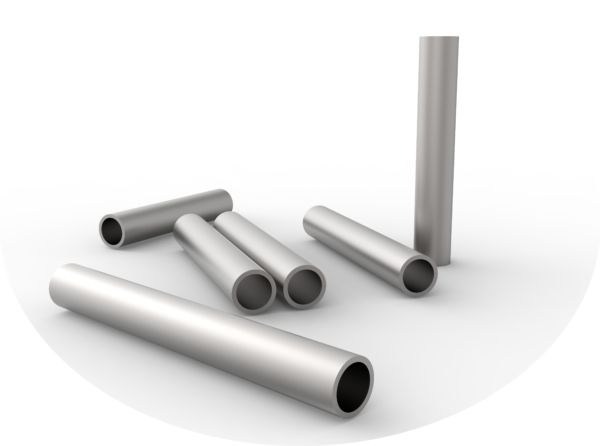
A pipe is a cylindrical component, predominantly with a circular cross-section, commonly used to transport substances that can flow, such as liquids, gases, and occasionally solids.
Both terms, “Pipe” and “Tube,” are commonly used. “Tube” is generally used for pipes with square or rectangular cross-sections. Circular-section tubes often offer higher dimensional accuracy and surface quality compared to pipes, making them more expensive and widely utilized in various industries, especially pharmaceuticals.
Dimensional standards for metallic pipes, such as carbon steel, are typically ASME B 36.10 and ASME B 36.19, while non-metallic pipes like UPVC and polyethylene adhere to DIN 8074.
In all pipes, the outer diameter remains constant, with the wall thickness and corresponding inner diameter varying.
Different wall thicknesses are expressed using a parameter known as “Schedule”, ranging from Schedule 5 (thinner walls) to Schedule 160 (thicker walls).
Steel pipes can be categorized by manufacturing method into “Seamless Steel Pipes” and “Welded Steel Pipes”. Generally, seamless pipes are used for high-pressure applications, while welded pipes are suitable for water transfer lines, electrical conduit systems, etc.
What is the Relationship Between Temperature Variations and Pipe Pressure Capacity?
Temperature significantly affects the yield stress and allowable stress of pipe materials.
As temperature increases, the allowable stress in the pipe decreases.
Given the direct relationship between stress and pressure in pipes, an increase in temperature leads to a reduction in pressure capacity.
How to Determine Maximum Allowable Stress for Any Temperature Using Standards?
The ASME B31.3 standard provides the basis for design or allowable stress for process piping systems in industries.
To calculate the Maximum Allowable Pressure (Design Pressure) based on the ASME B31.3 standard, specific formulas and tables are utilized, which depend on factors such as temperature, alloy type, pipe thickness, and diameter. Below is an example calculation for allowable pressure at a given temperature.
Steps to Calculate Allowable Pressure
Gather Initial Data: Material, operating temperature, etc.
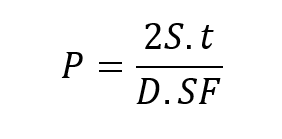
Use the Design Pressure Formula: According to ASME B31.3, the **Barlow’s Formula** is applied for pipes and piping systems as follows:
Where:
P: Allowable working pressure (psi)
S: Allowable stress at a specific temperature (psi, obtained from Table A-1 of ASME B31.3)
t: Pipe wall thickness (inches)
D: Pipe outer diameter (inches)
SF: Safety Factor (ranges from 1.5 to 10 depending on pipe application; for maximum pressure calculations, it is taken as 1).
3. Example Calculation:
According to Table 1 of ASME B36.10, for a carbon steel pipe (NPS 4, Schedule 5), the outer diameter is 4.5 inches, and the thickness is 0.083 inches. At 300°F, the allowable stress for A106 Grade A from Table A-1 is 16 Ksi. Using the formula, the maximum allowable pressure is:
If the temperature rises to 750°F under the same conditions, the allowable stress reduces to 10.7 Ksi, resulting in a new maximum pressure of:
To get detailed information about the calculation of tolerable pressure in pipes, refer to the following links:
Basic allowable stresses in metals (Table A-1) according to ASME B31.3 standard